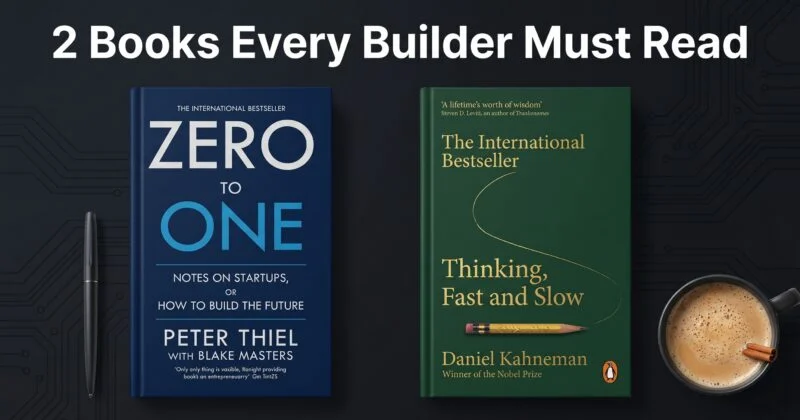
Amazon Book Bundle
2 Books. 1 Bundle. Unlimited Edge.
Har successful founder, creator aur builder ke shelf par yeh do books milti hain. Ab India mein ek bundle mein available hain.
Build the Future
Master Your Mind
Kuch books hain jo aap padhte ho, kuch info milti hai, aur aap aage badh jaate ho. Aur phir kuch books aisi hoti hain jo aap padhte ho aur realise karte ho ki aap duniya ko pehle se alag nazar se dekh rahe ho.
Yeh do books doosri category mein hain.
Zero to One aapko sikhata hai ki duniya mein genuinely new cheez kaise build karte hain — aur kyun competition mein rehna actually ek trap hai. Thinking, Fast and Slow aapko apna khud ka dimaag samjhaata hai — kyun hum woh decisions lete hain jo hum lete hain, aur kaise better think karna seekhein.
Saath mein yeh do books ek complete system deti hain: outside game (Zero to One) + inside game (Thinking Fast and Slow). Ek hi bundle mein Amazon par available hain — aur honestly, yeh ek among the best investments hai jo aap ₹1,000 ke andar kar sakte hain.
Book 1 — Zero to One: Notes on Startups, or How to Build the Future
TO
ONE
Yeh book kiske baare mein hai?
Peter Thiel PayPal ke co-founder hain, Palantir ke founder hain, Facebook mein pehle bahar se invest kiya, aur SpaceX aur LinkedIn mein bhi early investor the. Matlab yeh woh insaan hai jisne Silicon Valley ke sabse bade bets mein se kaafi sahi nikale. Zero to One unke Stanford ke startup course ke notes se nikli hai — aur yeh ek aise insaan ki real thinking hai jisne actually yeh sab build kiya.
Title ka matlab simple hai: 0 se 1 matlab kuch bilkul naya banana jo pehle exist nahi karta tha. 1 se n matlab woh cheez copy karna jo already exist karti hai. Thiel ka argument hai ki asli progress, asli value — sirf 0 se 1 aata hai. Baaki sab sirf competition hai.
The most contrarian thing of all is not to oppose the crowd but to think for yourself.
— Peter Thiel, Zero to One
5 ideas jo is book se forever mind mein rahenge
Monopoly is the goal, competition is the trap
Thiel kehte hain: sabse successful companies woh hain jo competition se door hain. Competition profits destroy karta hai. Google, Apple, Amazon — sab monopolies hain apne domain mein. Aapko bhi ek aisa corner dhundna hai jo sirf aapka ho.
Secrets — duniya mein bahut kuch abhi bhi undiscovered hai
Har great business ek secret ke upar bana hai — koi cheez jo aap jaante ho lekin zyaadatar log nahi jaante. Thiel ka favorite interview question: “What important truth do very few people agree with you on?” Is sawaal ka jawab ek business idea ho sakta hai.
10x better — sirf thoda better kaafi nahi hai
Naya product market mein tabhi entry kar sakta hai jab woh existing alternative se 10 times better ho kisi key aspect mein. Thoda better? Logi switch nahi karenge. 10x better? Woh sab kuch chhodke aayenge.
Start small — phir dominate karo
Thiel kehte hain startup ki sabse badi galti yeh hai ki woh bade market mein jaake 1% pakadne ki koshish karte hain. Strategy hona chahiye: ek chote, specific market mein 100% pakdo. Phir expand karo. Amazon ne sirf books se shuru kiya tha.
Definite optimism — future plan karo, fate pe mat chhodo
Thiel 4 mindsets identify karte hain: definite/indefinite optimist/pessimist. Sabse powerful hai definite optimist — jo clearly jaanta hai future kaisa hona chahiye aur usके liye actively build karta hai. Baaki log sirf react karte hain.
Team aur culture — shuruat mein sabse zyada matter karta hai
Thiel kehte hain founding team ki compatibility ek marriage jaisi hoti hai. Wrong co-founder = startup ka end. Early team culture ek baar set ho gayi toh badalni mushkil hoti hai. Yeh ek founding decision hai, HR decision nahi.
India ke creators aur builders ke liye yeh book kyun zaroori hai?
India mein hum usually “already proven model” copy karte hain — kisi ne Zomato banaya toh doosra food delivery startup. Kisi ne Byju’s banaya toh doosra edtech. Thiel exactly isi ko challenge karta hai. Woh kehta hai: copy karna ek temporary game hai jisme sab lose karte hain. Genuinely naya banana — woh permanent value create karta hai.
Agar aap koi startup, content brand, ya digital business build kar rahe ho — yeh book aapko sikhayegi ki sahi sawaal kaise puchhna hai. Answers aapke apne hongey. Sawaal Thiel ka hai.
Book 2 — Thinking, Fast and Slow
FAST
& SLOW
Yeh book kiske baare mein hai?
Daniel Kahneman ek Israeli-American psychologist hain jinhe 2002 mein Nobel Prize in Economics mila — bina economics ki formal training ke. Unka kaam ek simple par explosive idea par based tha: hum sochte hain ki hum rational hain, lekin asli mein hum nahi hain. Aur unke decades ke research ne exactly prove kiya ki kaise aur kyun nahi hain.
Book ka core idea yeh hai ki hamare dimaag mein do systems hain jo ek saath kaam karte hain:
Fast, automatic, emotional. Yeh hamesha on rehta hai. Faces recognize karna, danger sense karna, quick judgements lena — yeh sab System 1 karta hai bina aapki marzi ke. 96% thinking yaheen hoti hai.
Slow, deliberate, logical. Complex math, careful analysis, tough decisions — yeh System 2 ka kaam hai. Problem: yeh lazy hai. Energy bacha ke rakhta hai. Jab bhi ho sake System 1 ko kaam karne deta hai — even jab use nahi karna chahiye.
Nothing in life is as important as you think it is when you are thinking about it.
— Daniel Kahneman, Thinking Fast and Slow
6 ideas jo ek baar samajh aaye toh kabhi bhool nahi sakte
WYSIATI — What You See Is All There Is
System 1 ek story banata hai sirf available information se — bina yeh realize kiye ki missing information bhi hai. Isliye hum jaldi conclusions pe pahunchte hain. Yeh ek of the most dangerous mental bug hai.
Loss aversion — gains se zyada darr lagte hain losses
Kahneman ka groundbreaking research: ₹1000 khoने ka dard ₹1000 milne ki khushi se 2x zyada strong hota hai. Isliye log safe rahte hain jab risk lena zyada profitable hota. Har investor, entrepreneur, ya job-changer ise samjhe.
Anchoring effect — pehla number dimaag mein jakad jaata hai
Agar pehle aapko bola jaaye “yeh product ₹10,000 ka hai” aur phir ₹6,000 mein milta hai — bargain lagega. Agar ₹3,000 se shuru kiya hota toh expensive lagta. Negotiations, pricing, salary — sab jagah anchoring kaam karta hai.
Cognitive ease — familiar cheez = safe lagti hai
Jo cheez familiar ho, repetitive ho, easy to read ho — woh zyada “true” lagti hai. Isliye branding kaam karti hai. Isliye propaganda kaam karta hai. Isliye aapka pehla impression often sahi nahi hota.
Overconfidence — hum sab sochte hain hum average se better hain
Studies mein 93% drivers khud ko average se better driver maante hain. Yeh mathematically impossible hai. Hum apni skills, apne predictions, apne judgements — sab mein overconfident hain. Kahneman ise quantify karta hai.
Peak-End rule — experience nahi, memories matter karti hain
Hum koi experience kaise yaad karte hain woh depend karta hai peak moment aur ending par — baaki ka average nahi. Yeh customer experience, content creation, relationships — sab mein apply hota hai. Ending always matters most.
India ke context mein yeh book kyun explosive hai?
India mein bahut saari “financial decisions” purely System 1 se li jaati hain — FOMO-based investments, herd mentality trading, peer pressure ke career choices. Yeh book aapko exactly ek language deti hai in patterns ko identify karne ki. Jab aap realise karte ho ki aapka dimaag ek predictable pattern mein galti kar raha hai — aap use correct kar sakte ho.
Creators ke liye: anchoring, cognitive ease, aur peak-end rule directly aapki content strategy aur audience psychology mein apply hote hain. Kahneman padh ke aap apne audience ko genuinely zyada deeply samajh sakte hain.
Dono books ek saath kyun padhni chahiye?
The Complete Game: Outside + Inside
Aapko sikhata hai ki bahar ki duniya mein kaise move karo — kaise build karo, kahan opportunity hai, competition se kaise door raho, kya actually value create karta hai.
Aapko sikhata hai ki andar ki duniya kaise kaam karti hai — aap kaise sochte ho, aapke biases kya hain, aap kab aur kyun galat decisions lete ho, aur ise kaise fix karo.
Real mein: Zero to One batata hai ki kya karna hai. Thinking Fast and Slow batata hai ki kyun hum woh nahi karte jo karna chahiye — aur kaise gap ko bridge karein. Yeh complementary books hain, competitive nahi.
Quick Comparison
| Zero to One | Thinking Fast & Slow | |
|---|---|---|
| Author | Peter Thiel (PayPal, Palantir founder) | Daniel Kahneman (Nobel Laureate) |
| Core theme | Build unique things, avoid competition | Understand how your mind works |
| Length | 195 pages — easy, fast read | 499 pages — dense but rewarding |
| Style | Bold, opinionated, contrarian | Research-based, evidence-heavy |
| Best for | Entrepreneurs, creators, builders | Anyone who makes decisions (everyone) |
| Re-read value | High — different meaning at different life stages | Very high — new insights every time |
| One-line verdict | Read this before starting anything | Read this before deciding anything |
Yeh bundle kaun padhey?
Digital creators & bloggers
Zero to One se samjho ki content mein unique angle kaise dhundho. Fast & Slow se samjho ki audience psychology kaise kaam karti hai.
Startup founders & entrepreneurs
Zero to One pehli padhi jaane wali book honi chahiye har founder ke liye. Fast & Slow second. Koi debate nahi.
Freelancers & career builders
Fast & Slow se samjho ki salary negotiations, pricing decisions aur client relationships mein biases kaise kaam karte hain.
Investors & traders
Thinking Fast & Slow specifically financial decision-making ke biases cover karta hai — loss aversion, overconfidence, anchoring. Must-read.
Students (any stream)
Yeh do books career decisions, study strategies aur life choices — sab mein better thinking develop karti hain. Age koi factor nahi.
Curious minds
Agar aap sirf yeh samajhna chahte ho ki duniya aur aapka dimaag kaise kaam karta hai — dono books equally rewarding hain.
Dono books. Ek bundle. Best value.
Zero to One · Thinking, Fast and Slow (Penguin Press Non-Fiction)
Amazon par khareedein — Bundle
*Affiliate link. Price Amazon par check karein. Aapko koi extra charge nahi hota.