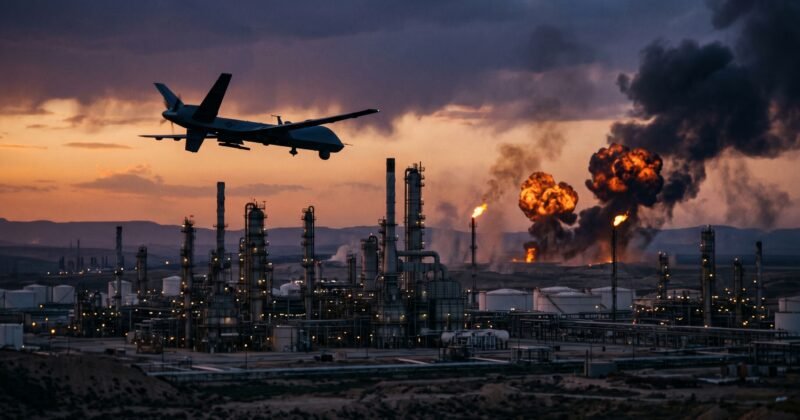
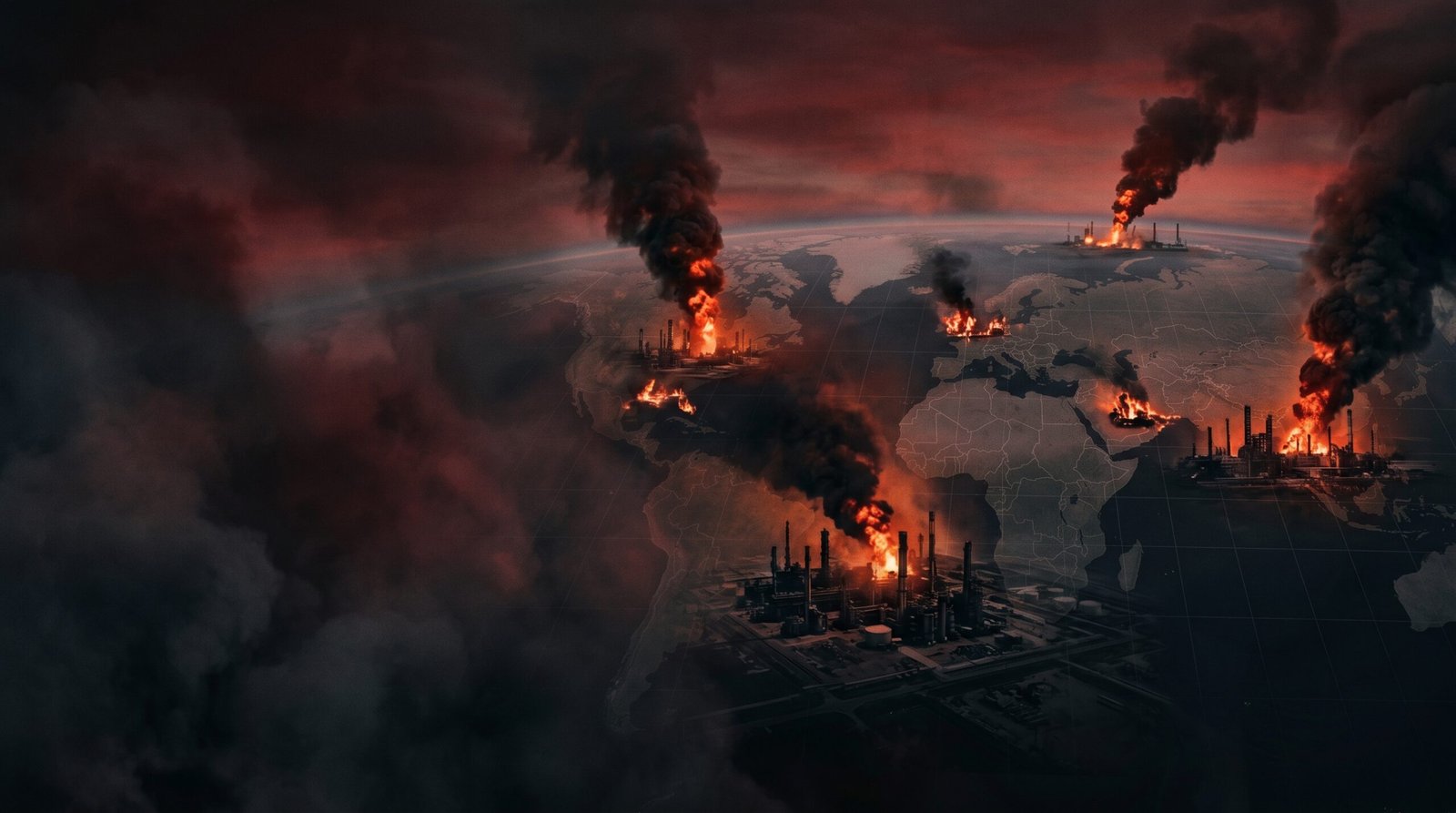
In the first four months of 2026, the world witnessed something unprecedented — a wave of oil refinery fires, explosions, and forced shutdowns hitting multiple continents almost simultaneously. From drone strikes crippling Russian refineries to industrial accidents shutting down facilities in the USA, Australia, and India, the global oil supply chain is under enormous stress. Oil prices are rising, fuel stocks are falling, and governments are struggling to explain what is happening to their energy infrastructure.
This article gives you a complete, date-wise list of every major oil refinery fire, shutdown, or offline incident in 2026 — along with causes, consequences, and what it all means for the world economy and everyday people.
📋 What You Will Read in This Article
- Why Are So Many Refineries Catching Fire in 2026?
- Complete Date-Wise List of All Major Incidents
- Russia: Ukraine’s Drone War on Oil Infrastructure
- USA: Explosions at Two of America’s Biggest Refineries
- Australia: Geelong Refinery Fire Shakes Fuel Security
- India: HPCL Pachpadra Fire Cancels PM Modi’s Inauguration
- Mexico, Ecuador, Romania & More
- Global Impact: Oil Prices, IEA Warning & What’s Next
- Conclusion
Major Incidents (Feb–Apr 2026)
Countries Affected
Barrels/Day Lost (IEA Est.)
Days — 1 Incident Every 3 Days
🔥 Why Are So Many Refineries Catching Fire in 2026?
Before diving into the complete list, it is important to understand the bigger picture — why is this happening all at once?
Energy experts and the International Energy Agency (IEA) have pointed to several overlapping factors driving this alarming cluster of oil refinery fires and shutdowns in 2026:
- War and geopolitical conflict: Ukraine’s sustained drone campaign is deliberately targeting Russian oil refineries to cut Moscow’s war-funding revenue. Separately, the US-Israel conflict with Iran triggered the closure of the Strait of Hormuz, a critical shipping route for global crude oil. This caused a supply shock that forced refineries worldwide to operate at unusually high throughput with little room for maintenance.
- Deferred maintenance: Many refineries skipped scheduled maintenance shutdowns to keep product flowing during the global supply crunch. Overworked equipment eventually fails. In Australia, union officials confirmed Geelong refinery had deferred maintenance in March 2026 — just weeks before its fire.
- High utilization pressure: Global refinery utilization rates were running unusually high in late 2025 and early 2026, with facilities under institutional pressure to keep producing. This significantly increases the risk of accidents.
- Aging infrastructure: The IEA has noted that global refining capacity has been in structural decline for years as investment in new capacity falls during the energy transition. Less redundancy means each incident has a bigger impact.
- Sabotage and unknown causes: Some incidents remain under investigation, with causes not yet publicly confirmed.
📋 Complete Date-Wise List: All Major Oil Refinery Fires & Shutdowns in 2026
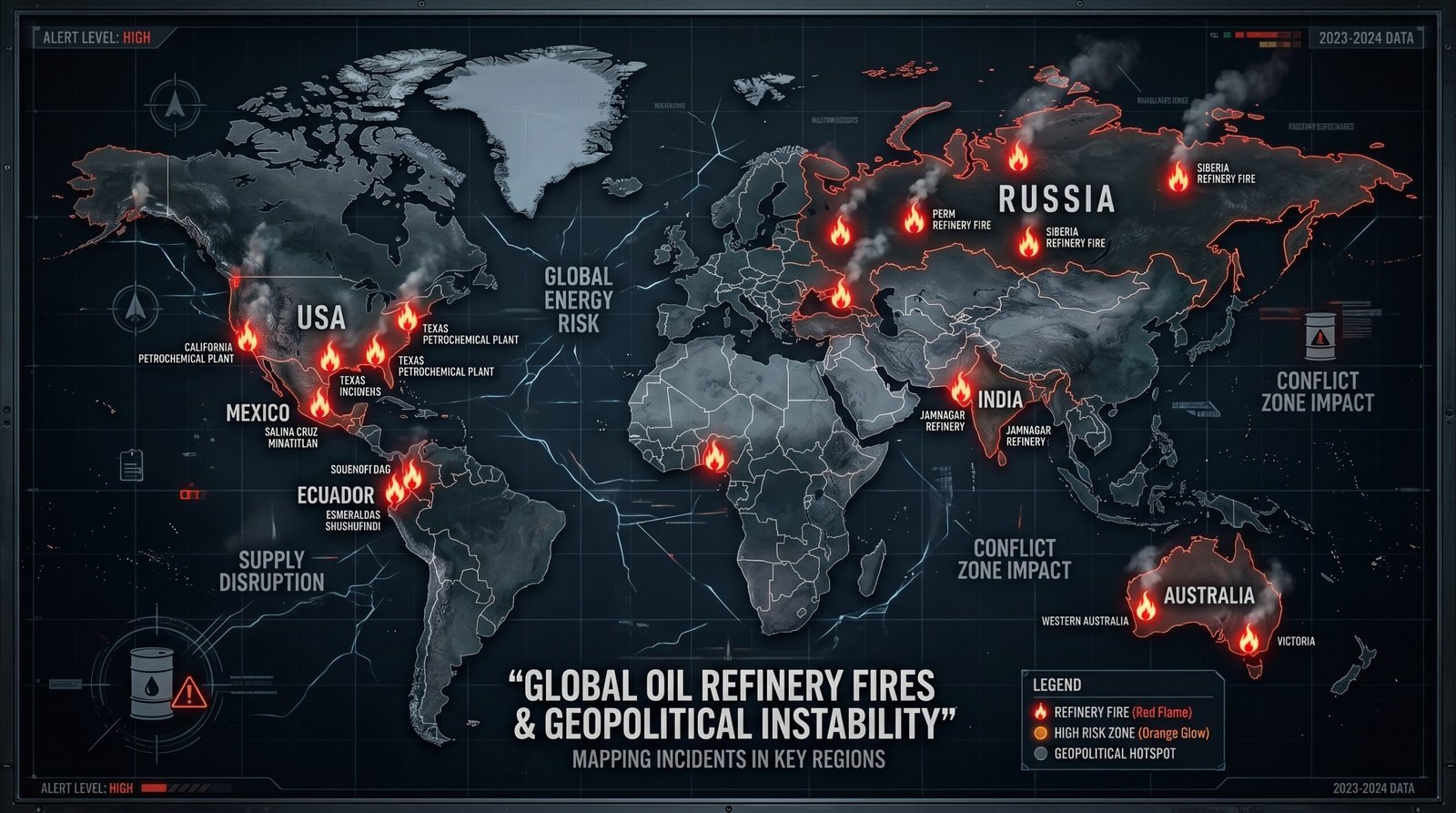
Oil refinery fire and shutdown locations across the globe — February to April 2026
| # | Date | Refinery / Facility | Country | Cause | Type |
|---|---|---|---|---|---|
| 1 | Feb 19, 2026 | Chevron El Segundo Refinery | 🇺🇸 USA | Fire in jet fuel unit | Accident |
| 2 | Mar 1, 2026 | Ecuador’s Largest Oil Refinery | 🇪🇨 Ecuador | Fire (cause under probe) | Accident |
| 3 | Mar 17, 2026 | Pemex Olmeca / Dos Bocas Refinery | 🇲🇽 Mexico | Fire — 2nd incident at same site | Accident |
| 4 | Mar 21, 2026 | Rosneft Saratov Oil Refinery | 🇷🇺 Russia | Ukrainian drone strike | War/Drone |
| 5 | Mar 23, 2026 | Valero Port Arthur Refinery | 🇺🇸 USA | Explosion in diesel hydrotreater unit | Accident |
| 6 | Mar 26, 2026 | KINEF Kirishi Refinery | 🇷🇺 Russia | Ukrainian drone strike | War/Drone |
| 7 | Apr 5, 2026 | NORSI Refinery, Nizhny Novgorod | 🇷🇺 Russia | Ukrainian drone strike | War/Drone |
| 8 | Apr 9, 2026 | Pemex Dos Bocas (Olmeca) — 2nd Fire | 🇲🇽 Mexico | Fire at flagship new refinery | Accident |
| 9 | Apr 14, 2026 | Vedanta Thermal Power Plant, Sakti | 🇮🇳 India | Boiler explosion | Accident |
| 10 | Apr 15–16, 2026 | Viva Energy Geelong Refinery | 🇦🇺 Australia | Fire in Alkylation/Gasoline unit | Accident |
| 11 | Apr 16, 2026 | Tuapse Refinery (Strike 1) | 🇷🇺 Russia | Ukrainian drone strike — port & tanks hit | War/Drone |
| 12 | Apr 18, 2026 | Novokuibyshevsk Refinery | 🇷🇺 Russia | Ukrainian drone — both primary units shut | War/Drone |
| 13 | Apr 20, 2026 | Tuapse Refinery (Strike 2) | 🇷🇺 Russia | Ukrainian drone — 24 storage tanks destroyed | War/Drone |
| 14 | Apr 20, 2026 | HPCL Pachpadra Refinery (HRRL) | 🇮🇳 India | Exchanger explosion in CDU/VDU unit | Accident |
| 15 | Apr 20, 2026 | CET Vest Power Plant | 🇷🇴 Romania | Electrical transformer explosion (30–40 tons oil) | Accident |
| 16 | Apr 21, 2026 | Etoile Well Site, Nacogdoches County | 🇺🇸 USA | Explosion at oil/gas well; flames visible for miles | Accident |
| 17 | Apr 28, 2026 | Tuapse Refinery (Strike 3) | 🇷🇺 Russia | Ukrainian drone — 3rd hit in 12 days | War/Drone |
🇷🇺 Russia: Ukraine’s Drone War on Oil Infrastructure
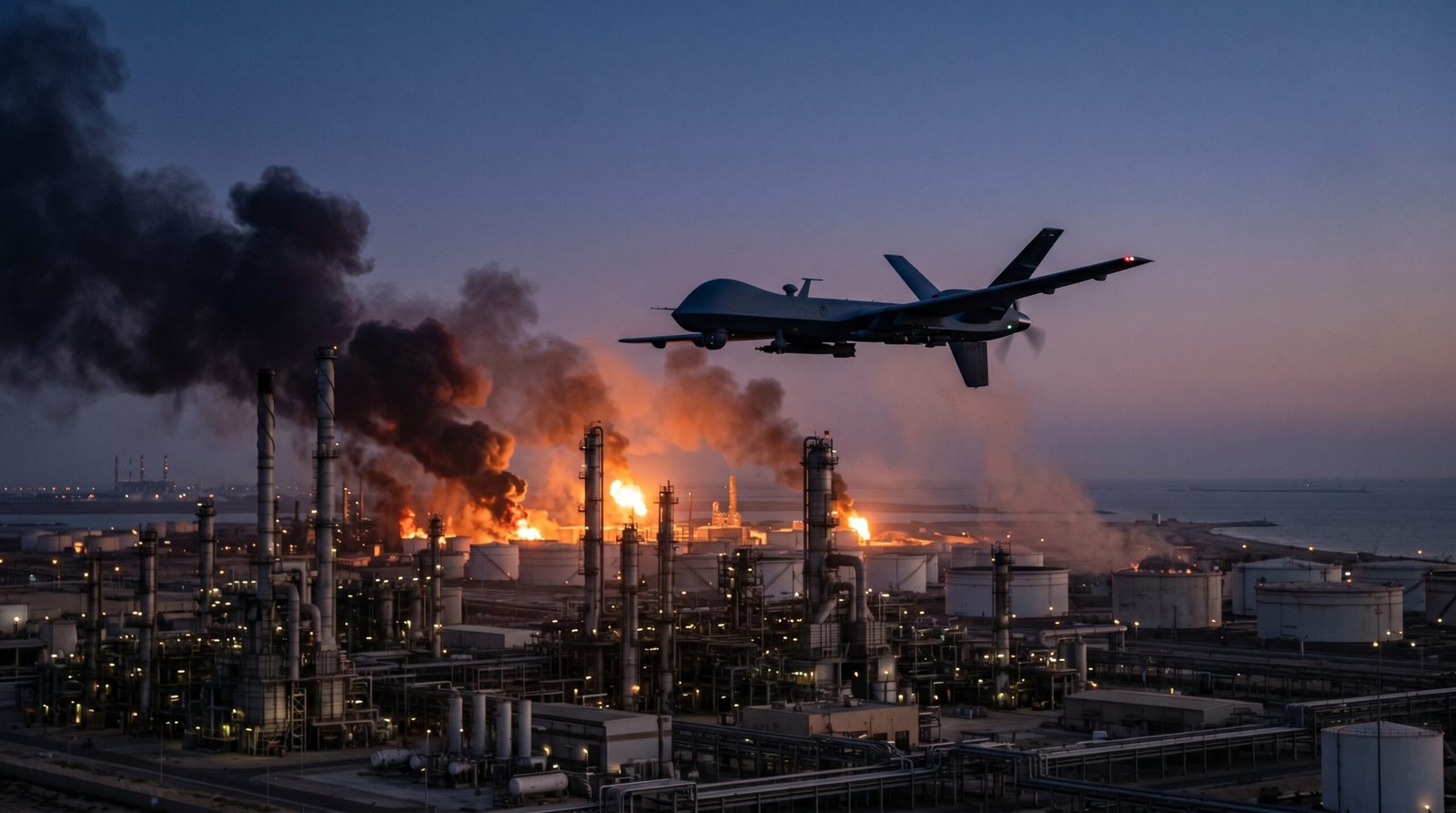
Ukraine’s sustained drone campaign has targeted multiple Russian oil refineries in 2026, crippling Moscow’s fuel revenue
Russia has been the hardest-hit country in this wave of refinery disruptions — and the cause is clear: a deliberate, sustained campaign by Ukraine to destroy Russian oil infrastructure and cut the Kremlin’s war funding.
🔴 Tuapse Refinery — Russia’s Most Devastating Loss
The Tuapse Refinery, operated by Rosneft on Russia’s Black Sea coast, is the most dramatic case. With an annual processing capacity of 12 million metric tons (240,000 barrels per day), it is Russia’s only major refinery on the Black Sea and a critical export hub for naphtha, diesel, fuel oil, and vacuum gasoil.
Ukraine struck it three times in just 12 days — on April 16, April 20, and April 28, 2026. After the April 20 strike alone, 24 storage tanks were destroyed and four more damaged. The refinery has been completely offline with no timeline for restart. Toxic gases including benzene and xylene were released into the atmosphere. Residents reported “black rain” — oily, sooty deposits falling from the sky. Thousands were evacuated. Satellite images confirmed an oil slick forming in the Black Sea.
🔴 Other Russian Refineries Hit in 2026
- Saratov Oil Refinery (Mar 21): Drone strike forced the refinery to stop accepting crude oil.
- KINEF Kirishi Refinery (Mar 26): The largest refinery in European Russia was shut down following a drone attack.
- NORSI Refinery, Nizhny Novgorod (Apr 5): Russia’s 4th largest refinery — a supplier of fuel to the Moscow region — was hit and suspended operations. Western sanctions are making repairs extremely difficult due to restricted access to specialized equipment.
- Novokuibyshevsk Refinery (Apr 18): Both primary refining units, AVT-11 and AVT-9, were shut down after a drone strike. The facility produced 1.1 million tons of gasoline, 1.6 million tons of diesel, and 1.3 million tons of fuel oil in 2025.
Ukraine’s military has openly confirmed these attacks, describing the campaign as an effort to reduce the oil revenues funding Moscow’s military operations. Russia’s oil exports fell more than 30% in 2026, and serious budget pressure is expected by mid-year.
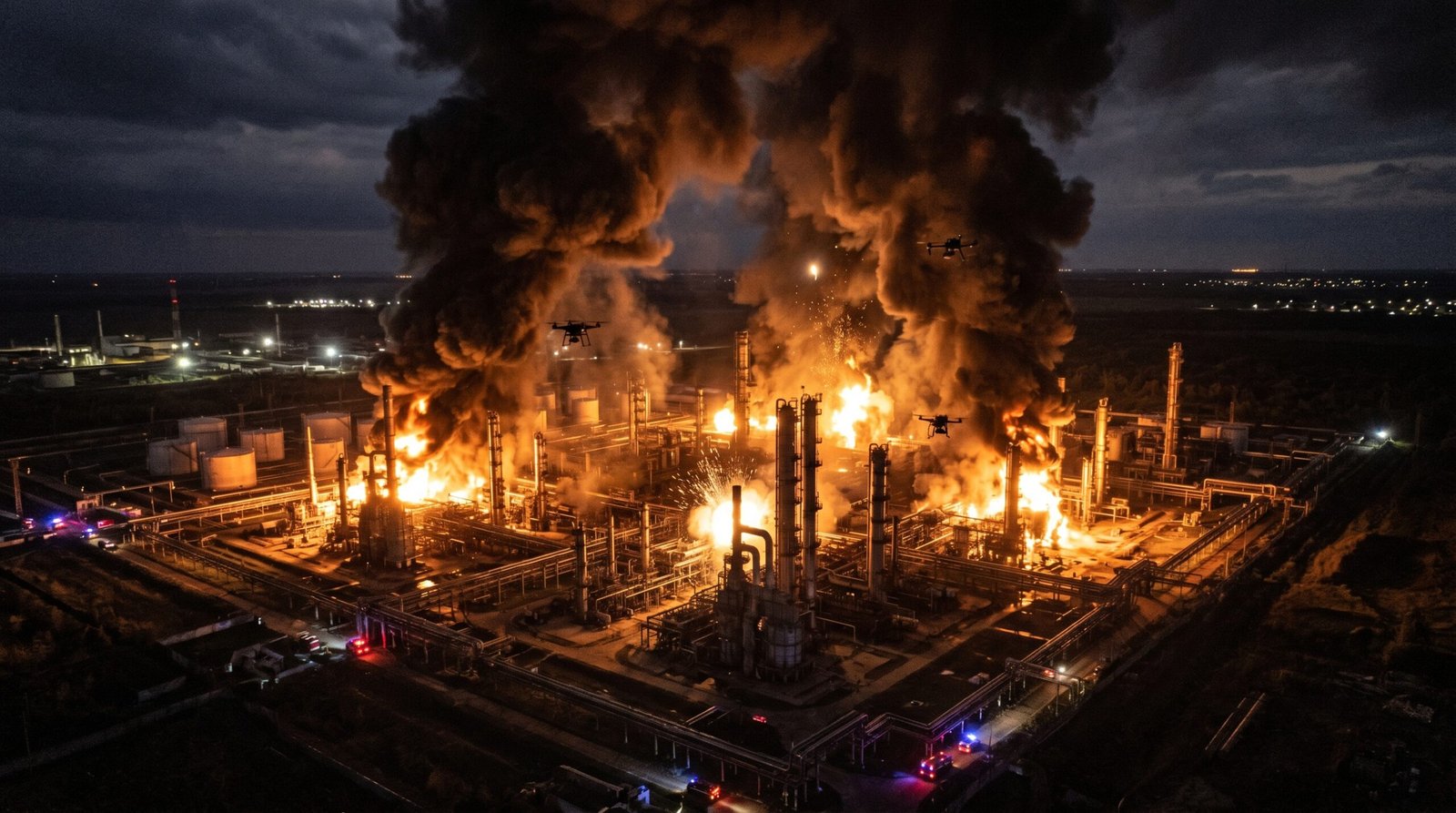
Tuapse Refinery ablaze after repeated Ukrainian drone strikes — April 2026. The facility remains completely offline.
🇺🇸 USA: Explosions Hit Two of America’s Biggest Refineries
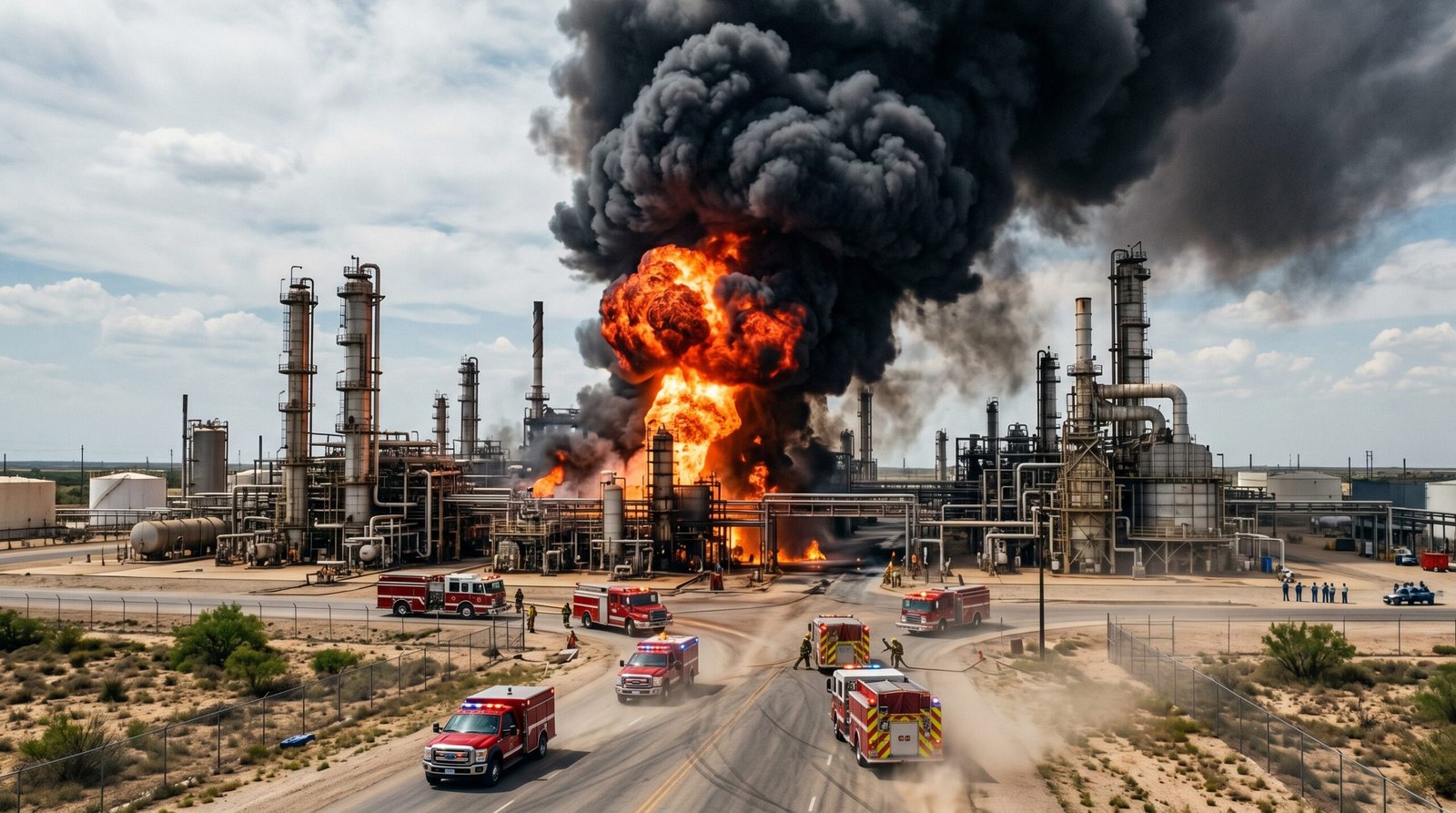
The Valero Port Arthur refinery explosion on March 23, 2026 — one of the largest refinery incidents in the US this year
🟠 Valero Port Arthur Refinery — Texas (March 23, 2026)
The most significant non-war refinery incident in the United States was the explosion at Valero’s Port Arthur facility in Texas on March 23, 2026. This is one of the largest oil refineries in the entire country, processing approximately 380,000 to 435,000 barrels per day.
The blast originated in the diesel hydrotreater unit, shook homes several miles away, and sent towering columns of black smoke into the sky visible from neighbouring counties. A temporary shelter-in-place order was issued for residents in the surrounding area. Multiple operating units were shut down for several days. The Texas Commission on Environmental Quality confirmed the investigation into the cause remains open.
🟠 Chevron El Segundo Refinery — California (February 19, 2026)
Earlier in the year, a fire broke out in the jet fuel unit of Chevron’s El Segundo refinery near Los Angeles on February 19, 2026, lighting up the California skyline and briefly disrupting Southern California fuel operations. The refinery was partially shut down while the fire was contained.
🟠 Etoile Well Site — Texas (April 21, 2026)
An explosion at an oil and gas well site near Etoile, Nacogdoches County, Texas triggered a large fire visible for miles and led to precautionary evacuations of nearby residents. The cause was still under investigation at the time of publication.
🇦🇺 Australia: Geelong Refinery Fire Shakes National Fuel Security
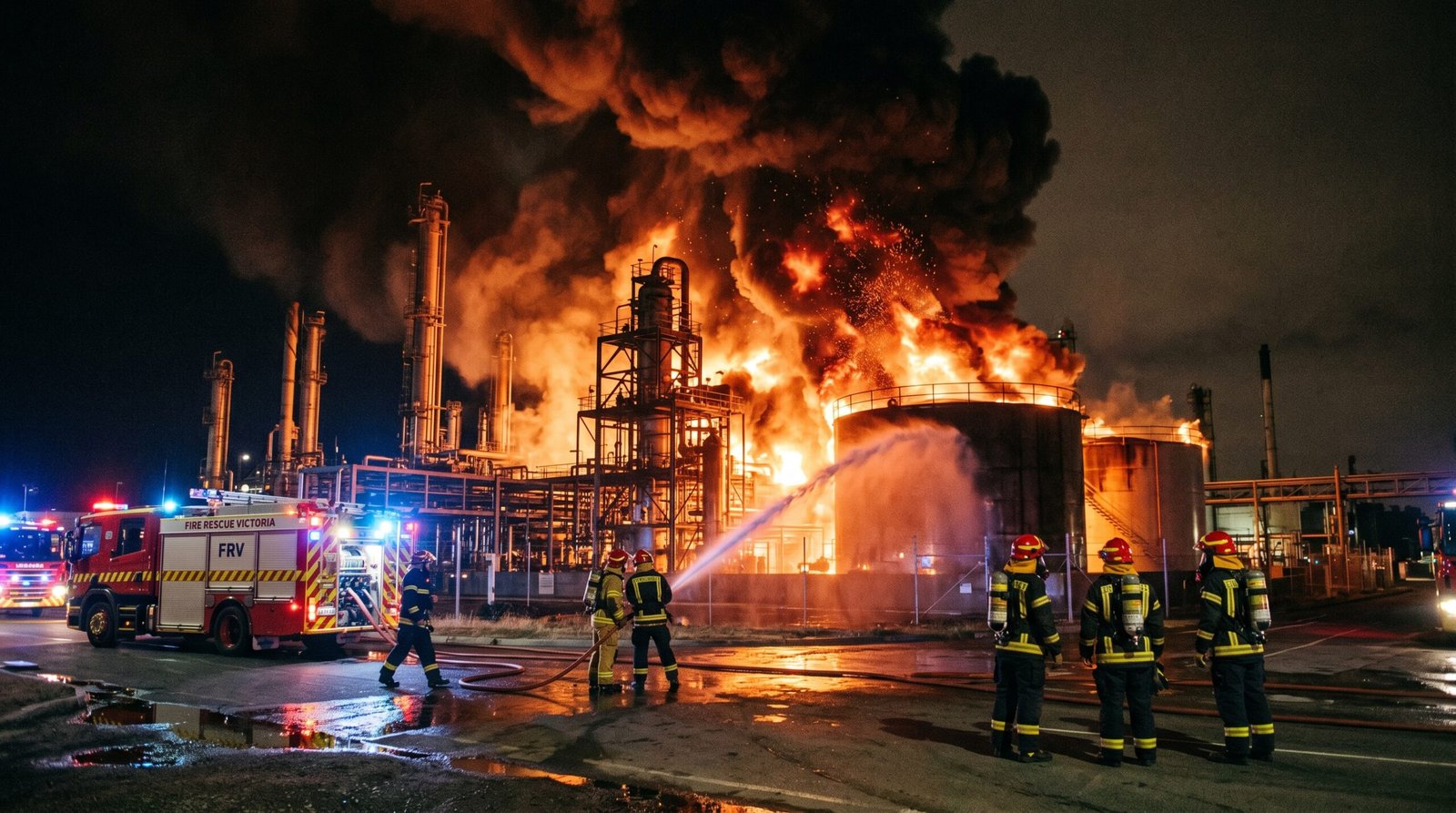
The Viva Energy Geelong refinery fire on April 15–16, 2026 — one of only two operating refineries in Australia
🟡 Viva Energy Geelong Refinery Fire — April 15–16, 2026
Australia was shocked when a large fire broke out at Viva Energy’s Geelong Refinery in Victoria on the night of April 15–16, 2026. This is one of only two operating oil refineries in all of Australia, making the incident nationally significant.
The fire started in the Alkylation Unit within the broader Gasoline complex, spreading rapidly through interconnected pipelines and causing pressure releases and explosion-like bursts. Emergency systems were activated across multiple units, and thick smoke spread above the Corio industrial zone.
The numbers are alarming: the Geelong refinery supplies roughly 50% of Victoria’s fuel requirements and about 10% of Australia’s total national fuel demand. After the fire, gasoline output dropped to just 60% of normal capacity. Diesel and jet fuel fared better at approximately 80% capacity. Viva Energy shares fell as much as 9.5%, with trading halted for two full days.
Australian Energy Minister Chris Bowen urged the public not to panic, saying there was no immediate shortage risk. The government activated fuel security protocols. Australia’s structural dependence on just two domestic refineries remains a critical national vulnerability.
🇮🇳 India: HPCL Pachpadra Fire Forces PM Modi to Cancel Inauguration
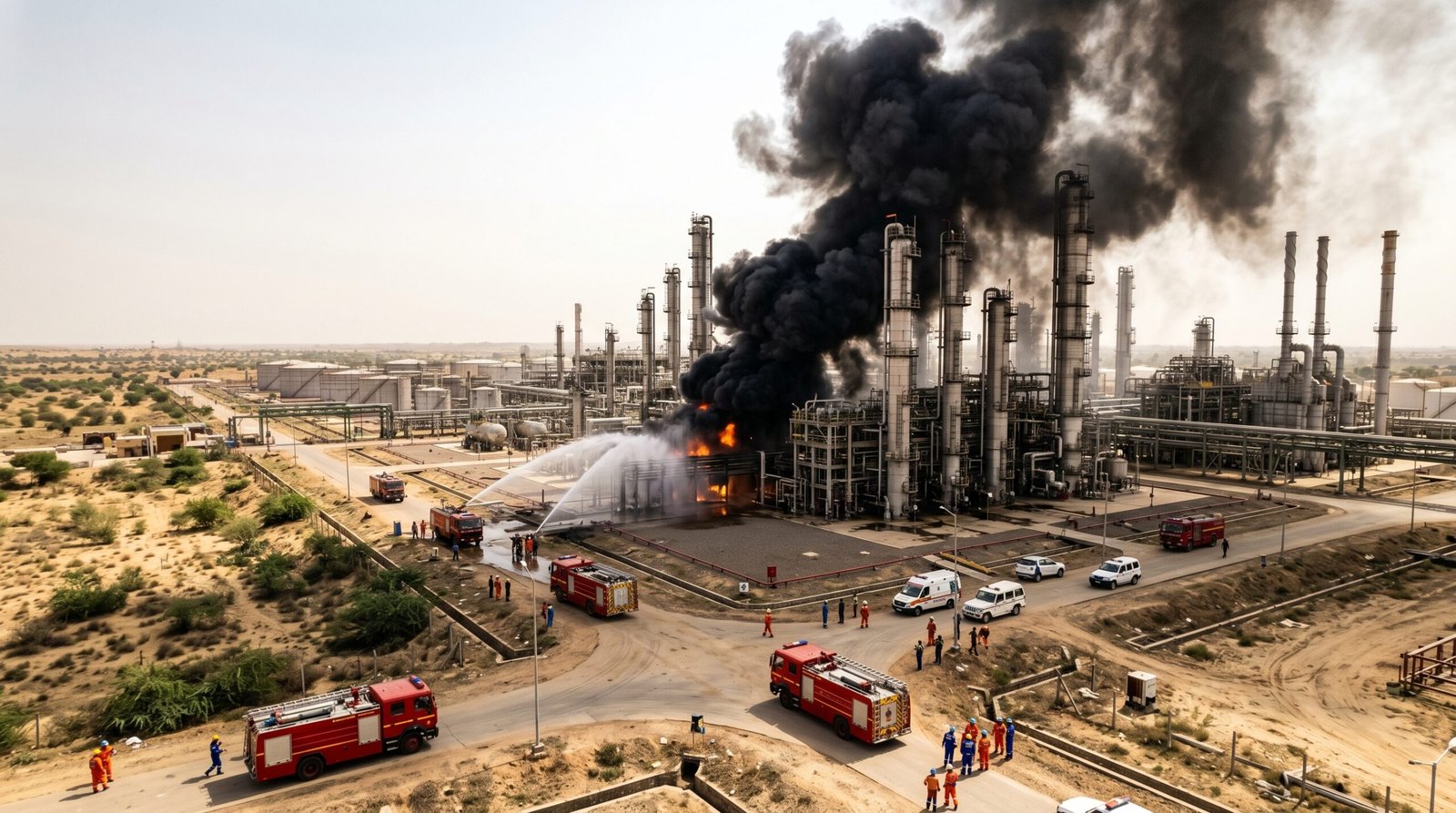
Black smoke rising from the HPCL Pachpadra refinery complex in Rajasthan — just hours before PM Modi’s inauguration was scheduled
🟠 HPCL Pachpadra / HRRL Refinery — Rajasthan (April 20, 2026)
One of the most politically dramatic incidents in this wave was the massive fire at the HPCL Rajasthan Refinery Limited (HRRL) complex in Pachpadra, Balotra district, Rajasthan — just hours before Prime Minister Narendra Modi was scheduled to officially inaugurate the ₹79,450 crore mega-project.
The blaze originated following an exchanger explosion in the Crude Distillation Unit (CDU) and Vacuum Distillation Unit (VDU) section of the refinery. Thick plumes of black smoke were visible from several kilometers away. Over 20 fire tenders were deployed immediately. Plant employees activated internal fire safety protocols and evacuated the area.
This facility — India’s first greenfield integrated refinery-cum-petrochemical complex — has a planned capacity of 9 million metric tonnes per annum (MMTPA) and is valued at over $9.5 billion. The timing could not have been worse: SPG teams were conducting final security sweeps for the PM’s visit when the explosion triggered chaos. PM Modi’s visit was officially cancelled and the inauguration postponed indefinitely.
The fire was particularly painful for India’s energy security ambitions, as the country urgently needs domestic refining capacity to offset disruptions caused by the Strait of Hormuz closure.
🔴 Vedanta Power Plant, Chhattisgarh — April 14, 2026
Just six days before the HPCL fire, a boiler explosion at Vedanta’s thermal power plant in Sakti, Chhattisgarh killed 19 workers during routine operations. Multiple others were injured. This was one of the deadliest energy sector accidents in India in recent years.
🌍 Other Countries: Mexico, Ecuador, Romania, Pakistan & Myanmar
🇲🇽 Mexico — Pemex Olmeca / Dos Bocas Refinery (Mar 17 & Apr 9, 2026)
Mexico’s flagship new Olmeca refinery at Dos Bocas, Tabasco, operated by PEMEX, suffered two separate fires within less than a month — on March 17 and April 9, 2026. The fact that Mexico’s newest and most strategically important refinery was hit twice in quick succession raised serious questions about the facility’s safety systems and commissioning process.
🇪🇨 Ecuador (March 1, 2026)
A major fire broke out at Ecuador’s largest oil refinery on March 1, 2026. Details on the exact cause remained limited in early public reports, but the incident disrupted operations at the country’s most critical fuel processing facility.
🇷🇴 Romania — CET Vest Power Plant, Bucharest (April 20, 2026)
A powerful explosion struck the CET Vest district heating and power plant in Bucharest on April 20, 2026, involving electrical transformers containing 30–40 tons of insulating oil. The explosion caused fires that damaged multiple transformer units and led to temporary instability in the city’s power grid. Romania is now assessing long-term impacts on Bucharest’s grid resilience.
🇵🇰 Pakistan & 🇲🇲 Myanmar
A Sui Northern Gas pipeline in Hattar Industrial Estate, Khyber Pakhtunkhwa, Pakistan ruptured and ignited on April 16–17, 2026, triggering a massive fire that engulfed nearby residential quarters. In Myanmar, a major explosion at the Homalin river port on the Chindwin River (April 20–21) ignited a blaze that engulfed more than 10 fuel tankers.
📉 Global Impact: Oil Prices, IEA Warning & What’s Next
The cumulative effect of these incidents is enormous. Here is what is happening to the global economy and everyday consumers:
- Oil prices rising: With supply tightening and inventories falling, crude oil prices have been on an upward trajectory. The combination of the Hormuz closure, Russia’s damaged refineries, and industrial accidents in the US and Australia has created a perfect storm for price escalation.
- Fuel supply disruptions: In Australia, southeastern states faced reduced gasoline availability. In India, the Pachpadra fire set back the country’s energy independence timeline at the worst possible moment. In Russia, oil exports dropped over 30%, hitting the Kremlin’s budget hard.
- Energy transition pressure: The European Commission launched an $86 billion clean energy strategy in direct response to these disruptions. However, the IEA has cautioned that renewables cannot substitute for oil-derived transport fuels in the near term, meaning refining capacity remains critical in 2026 and beyond.
- Russia’s budget crisis: With multiple refineries offline and oil exports down sharply, analysts predict Russia could face serious budget pressure by mid-2026, potentially affecting its ability to fund the war in Ukraine.
- Infrastructure vulnerability exposed: These events have forced governments worldwide to re-evaluate their energy security frameworks. Countries like Australia — with only two domestic refineries — are particularly exposed.
Safety experts have also noted that the current environment of price volatility creates subtle institutional pressures to keep refinery units running without adequate maintenance breaks — a pattern that historically precedes major industrial accidents. The clustering of incidents in early 2026 is consistent with exactly this kind of systemic risk materializing across multiple geographies at once.
🔚 Conclusion: A World on Edge
The wave of oil refinery fires, explosions, and shutdowns in 2026 is not a coincidence — it is the visible symptom of a global energy system operating under extreme stress. War, sanctions, deferred maintenance, high utilization pressure, aging infrastructure, and geopolitical instability have all converged in the same window, producing an unprecedented cluster of refinery disruptions across four continents.
From the smoking ruins of the Tuapse refinery in Russia to the disrupted inauguration of India’s most ambitious new refinery, the message is clear: the world’s oil infrastructure is fragile, and the stakes are rising. Whether you are tracking global oil prices, following the Russia-Ukraine war, or simply paying attention to your fuel bills — these events will shape energy markets and world politics throughout 2026 and well beyond.
Stay with Daily Simplify for the latest updates on global energy, world politics, and the news that matters — simplified for you.